Source Dual Gravity Table Seed Cleaner for Wheat Corn Rice
Find 30 dual gravity table seed cleaner options for grain processing. Compare specifications like capacity, cleaning rate, and material types from verified Chinese manufacturers to select the right equipment for your facility; compare the available evidence and request quotations based on your requirements.
Key considerations
Products List




Comprehensive Sourcing Guide
Dual Gravity Table Seed Cleaner Sourcing Guide
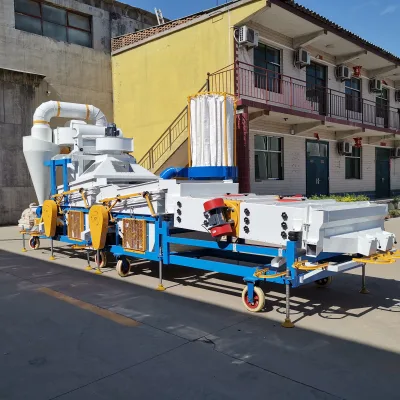
Procuring a dual gravity table seed cleaner requires a nuanced understanding of how specific gravity separation complements air screening to achieve high-purity results. These machines are engineered to remove impurities based on density differences, making them essential for processing grains like wheat, corn, rice, and soybeans. Buyers must recognize that while air screens handle size-based separation, gravity tables excel at removing stones, damaged kernels, and heavy contaminants that lighter methods miss. This dual-action approach ensures a cleaning rate that can reach up to 99.9%, significantly enhancing the market value of the final seed product.
The sourcing landscape for these machines is diverse, with manufacturers offering various configurations to suit different operational scales. Observed listings indicate a wide range of processing capacities, from smaller units handling 5-20 tons per hour to larger industrial systems capable of 25-40 tons per hour. Buyers should carefully match the machine’s capacity to their actual throughput requirements, considering that some models offer customizable options to adapt to specific domestic or international voltage standards. Understanding these variations is critical for selecting a unit that integrates seamlessly into existing production lines without causing bottlenecks or underutilization.
Product Scope and Observed Listing Signals
The market for dual gravity table seed cleaners presents a broad spectrum of models, with observed price points ranging from approximately $1,000 to $43,000 USD. This variance reflects differences in build quality, automation levels, and processing capacity. For instance, entry-level models may focus on basic gravity separation with manual adjustments, while premium units often include advanced features like automated vibration controls and multi-layer sieve screens. Buyers should note that the minimum order quantity is typically one unit, allowing for flexible procurement strategies whether for small-scale farms or large commercial processing facilities.
Key technical signals in listings often highlight specific model numbers such as the 5XFZ-15 or 5XFZ-80PLUS, which denote distinct structural and functional capabilities. Some units are designed with horizontal structures for stability, while others may offer vertical configurations for space-constrained environments. The cleaning accuracy is frequently advertised as being greater than or equal to 99%, with some high-end models claiming zero breakage rates for delicate seeds. Buyers must verify these claims against their specific material types, as the effectiveness of gravity separation can vary depending on the moisture content and density variations of the incoming grain batch.
Technical Specifications to Verify
When evaluating technical specifications, the gravity table size and sieve screen dimensions are primary indicators of processing efficiency. Common dimensions observed include a gravity table size of 24001900mm and sieve screens ranging from 24001800mm, which directly influence the throughput and separation precision. Buyers should verify the number of sieve layers, which typically range from three to five, as more layers allow for finer separation of impurities but may reduce overall speed. Additionally, the movement method, whether wheeled for portability or fixed for permanent installation, should align with the facility’s layout and operational flexibility needs.
Voltage compatibility and power requirements are critical technical factors that often require customization. Standard voltages like 380V or 220V are common, but buyers must ensure the machine can adapt to local electrical standards to prevent operational failures. The core functions, including specific gravity screening, air separation, and dust removal, should be clearly defined in the technical datasheet. Furthermore, the material construction, often specified as carbon steel or stainless steel, impacts durability and maintenance costs. Buyers should request detailed schematics to confirm that the internal mechanisms, such as the vibrating motors and air blowers, are rated for continuous heavy-duty operation.
Compliance and Safety Documentation
Compliance with international safety and quality standards is non-negotiable for industrial machinery procurement. Buyers should verify that the supplier provides relevant certifications, such as ISO, CE, Soncap, or Pvoc, which attest to the machine’s adherence to global manufacturing and safety protocols. These certifications are particularly important for exporters who need to ensure their equipment meets the regulatory requirements of destination markets. The absence of such documentation can lead to customs delays or operational liabilities, so buyers must insist on valid certificates before finalizing any purchase agreement.
Safety features and operational documentation are equally vital for ensuring a secure working environment. The machine should come with comprehensive manuals detailing electrical safety, emergency stop procedures, and maintenance schedules. Buyers should also check for any specific safety guards or interlocks on moving parts, such as the vibrating screens and gravity tables, to prevent accidental injury. Additionally, the supplier’s commitment to after-sales service, including the availability of engineers for overseas installation and troubleshooting, is a crucial component of the compliance and support framework. This ensures that any technical issues can be resolved promptly, minimizing downtime and maintaining production continuity.
Cost Drivers and Commercial Terms
Several factors influence the final cost of a dual gravity table seed cleaner, with processing capacity and material construction being primary drivers. Larger machines with higher throughput, such as those capable of 25-40 tons per hour, naturally command higher prices due to the increased material and engineering requirements. Similarly, the choice between carbon steel and stainless steel construction affects both the initial cost and long-term durability. Buyers should evaluate the total cost of ownership, considering that higher-quality materials may reduce maintenance expenses and extend the machine’s lifespan, providing better value over time.
Commercial terms, including packaging and shipping arrangements, also play a significant role in the overall procurement cost. Some suppliers offer no packing or wooden box packing, while others use export-standard woven bag packaging to prevent collision damage during transit. Buyers must clarify who bears the responsibility for shipping and insurance, as these costs can vary significantly depending on the destination. Additionally, the availability of customization options, such as specific voltage adaptations or color choices, may incur additional fees. It is essential to negotiate clear terms regarding warranty coverage and spare parts availability to avoid unexpected expenses post-purchase.
Supplier Qualification and Quality Control
Supplier qualification is a critical step in ensuring the reliability and performance of the purchased seed cleaner. Buyers should prioritize suppliers with a proven track record in manufacturing agricultural machinery, particularly those located in established industrial hubs like Shijiazhuang, Hebei, China. Verifying the supplier’s production capabilities, including their quality control processes and testing procedures, is essential to ensure that the machine meets the specified performance standards. Buyers should request references or case studies from previous clients to gauge the supplier’s reputation for delivering high-quality equipment and providing reliable support.
Quality control measures should extend beyond the final product inspection to include raw material sourcing and assembly processes. Buyers should inquire about the supplier’s standards for material selection, such as the grade of steel used for the frame and components. Additionally, the supplier should provide detailed inspection reports for key components, such as the vibrating motors and air blowers, to confirm their durability and efficiency. Engaging with suppliers who offer transparent communication and are willing to accommodate third-party inspections can significantly reduce the risk of receiving substandard equipment. This due diligence ensures that the purchased machine will perform reliably in demanding agricultural environments.
Long-Term Procurement Checks
Long-term procurement success depends on establishing a robust relationship with the supplier for ongoing support and maintenance. Buyers should verify the availability of spare parts, such as sieve screens, vibration motors, and air filters, to ensure minimal downtime during routine maintenance or unexpected failures. A reliable supplier should offer a comprehensive warranty and clear guidelines for claiming repairs or replacements. Additionally, buyers should assess the supplier’s responsiveness to technical inquiries and their ability to provide timely troubleshooting assistance, which is crucial for maintaining continuous production operations.
Regular performance monitoring and feedback loops are essential for optimizing the machine’s efficiency over time. Buyers should establish a schedule for routine inspections and maintenance, following the supplier’s recommendations to prevent wear and tear. Keeping detailed records of machine performance, including cleaning rates and energy consumption, can help identify potential issues early and inform future procurement decisions. By maintaining open communication with the supplier and staying informed about technological advancements in seed cleaning machinery, buyers can ensure that their operations remain competitive and efficient in the long run.
FAQs
What is the cleaning rate for dual gravity table seed cleaners?
The cleaning rate reaches 99.9% for specific models and 99.8% for others. This high efficiency ensures that impurities are effectively removed while maintaining grain quality during the processing operation.
Which materials can these machines process effectively?
These machines handle grain seeds, wheat, corn, rice, soybeans, sorghum, and other granular materials. The design supports versatile applications across various agricultural sectors requiring high-purity seed cleaning.
Can the voltage be customized for different regions?
Yes, the voltage is available as 380V, 220V, or customized to adapt to domestic and foreign power standards. This flexibility ensures the equipment operates safely in various international electrical environments.
What is the typical processing capacity of these units?
Processing capacities range from 5 to 40 tons per hour depending on the specific model selected. Buyers can choose between smaller 10-15t/H units or larger 25-40 Ton/H systems based on needs.
How is the machine structure designed for operation?
The structure is typically horizontal, though vertical options exist for specific applications. Movement methods include wheeled movement or fixed installation, allowing users to choose the setup that best fits their facility layout.
Are certifications like ISO and CE available for these machines?
Yes, certificates including ISO, CE, Soncap, and Pvoc are available for certain models. These certifications verify that the manufacturing standards meet international safety and quality requirements for export markets.
What is the damage rate during the cleaning process?
Zero breakage can be achieved during operation, ensuring minimal damage to the seeds. This feature is critical for preserving the germination rate and market value of high-quality agricultural products.